Four Hours With a Stranger: The Trixie Venue Buddy System, Explained
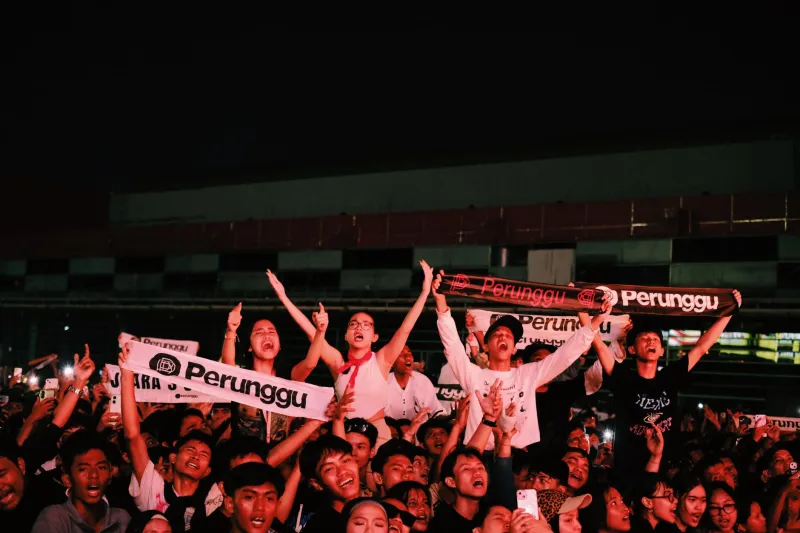
There is a particular kind of friendship that exists only at a Trixie show. It starts in the will-call line, peaks somewhere between the merch table and the bathroom sprint, and dissolves the moment the house lights come up. You may never learn their last name. You will definitely learn their opinion on the opener. And for about four hours, you are each other’s person.
This is not a niche hobby. It is infrastructure. The venue buddy system is how Trixie fans turn a room full of strangers into something that behaves, briefly, like a neighborhood. In 2026, when so much fandom happens through screens, the physical line is still one of the softest places to be. Here is how it works, how to do it well, and why it matters more than we usually admit.
Why the Buddy System Exists
A concert venue is a machine with a lot of moving parts and very few instructions. Doors open at 7, but the line starts at 3. The bar is cashless until it isn’t. The bathroom line moves like a glacier with a sense of humor. And if you are alone, every one of those small errands becomes a calculus problem: Can I leave my spot? Will I lose it? Is this person behind me going to be cool about it?
The buddy system solves that math. It is mutual aid with a wristband. One person holds the spot while the other finds water. One person watches the tote bag while the other sprints to the restroom. Nobody is asking for a lifelong commitment. They are asking for four hours of basic human reliability, which is honestly a fair ask in any line.
How to Spot a Safe Buddy
You do not need a background check. You need a read. The best venue buddies usually announce themselves quietly. They are the person also standing alone, also glancing at the door, also holding a spot for someone who has not returned yet. They ask before they touch your stuff. They offer to save your place before you have to ask. They laugh at the situation instead of making it weird.
A few green flags: they are clear about their own plans, they do not treat you like a ticket hookup, and they understand that “I’ll be right back” means ten minutes, not forty. They are not trying to recruit you into a group chat. They are just trying to make the line less boring.
Red flags are just as obvious once you know what you are looking for. Someone who immediately asks for your spare ticket. Someone who wants you to hold their bag for an hour while they disappear. Someone who makes the line feel like an audition. You are allowed to keep your buddy circle small. A polite “I’m actually going to stay put for a bit” is a complete sentence.
The Boundaries You Do Not Have to Announce
The venue buddy contract is unspoken, which is exactly why it works. Hold my spot, and I will hold yours. Watch my bag for two minutes, and I will watch yours. Do not take photos of me without asking. Do not use me as a buffer for a conversation you do not want to have. Do not make me responsible for your entire night.
And if the vibe shifts, you do not owe anyone a formal exit interview. “I’m gonna go find my friend” is a universally accepted line. So is “I think I see someone I know.” The buddy system is supposed to make the room feel safer, not stickier. The exit clause is part of the deal.
The Bathroom Sprint Is a Team Sport
Every Trixie fan knows the pre-show bathroom sprint. It is not glamorous. It is not optional. And it is infinitely better with a buddy. The trick is coordination. Decide who goes first. Agree on a meeting point. Do not vanish for an hour. If the line is long, send a text to the group chat you made six minutes ago. If you are the one holding the spot, be generous about the return window. Nobody is timing you with a stopwatch, but everybody notices when you turn a bathroom run into a full venue tour.
Bar, Merch, and the Will-Call Two-Step
The bar line and the merch line are where buddy systems prove their worth. One person holds the spot; the other grabs water. One person guards the tote; the other checks the size chart. If you are splitting a run, keep it simple. Cash, card, or Venmo, decide before you leave. Do not make your temporary buddy your personal assistant. The goal is reciprocal, not transactional.
Be the Adopter, Not Just the Adoptee
The best part of the buddy system is that it is easy to pay forward. If you see someone standing alone looking like they are doing math about whether they can leave their spot, offer the smallest possible kindness: “You want me to save your place?” That is it. You do not need to become their tour guide. You just need to make the room feel a little smaller.
Trixie fans are good at this. We are a fandom that has turned line culture into a personality trait, and the buddy system is one of the reasons it works. It is not about making best friends. It is about making four hours feel less like a solo mission and more like a shared secret.
The Exit Plan
Shows end. Buddy systems dissolve. You say thank you, maybe exchange socials, and then you go back to your regular life. The beauty of the four-hour friendship is that it does not need to become anything else. It was enough. It was a small, temporary alliance that made the night better for both of you. That is the whole point. The venue buddy system is not a commitment. It is a courtesy. And in a fandom built on shared context, courtesy goes a long way.